PSHE KS3
As part of our ongoing commitment to high-quality PSHE at our school, we are a Life Lessons partner school. Life Lessons takes a whole-school approach to PSHE, which includes:
• a fully inclusive, relevant and youth-led PSHE and RSHE curriculum that meets all statutory RSE guidance,
• age appropriate knowledge and skills curriculum that ensures young people are prepared for personal and social experiences,
• a range of videos where young people share their opinions and experiences, modelling discussion and listening for strong oracy and critical thinking development.
All young people will develop key skills including critical thinking, empathy, mental strength and resilience, and emotional regulation.
Curriculum Intent
PSHE enables our children to become healthy, independent and responsible members of society. It aims to help them understand how they are developing personally and socially, and tackles many of the moral, social and cultural issues that are part of growing up. We provide our students with opportunities for them to learn about rights and responsibilities and appreciate what it means to be a member of a diverse society. Our children are encouraged to become critical thinkers and develop their sense of self-worth by playing a positive role in contributing to school life and the wider community.
Assessment
Class work will be gathered as evidence of study.
Where appropriate, pupils may also have the opportunity to complete AQA Unit Award Scheme units that complement the topic being studied. These awards provide a meaningful way to recognise and celebrate achievement in specific areas of learning
Lesson Plans
Further Information
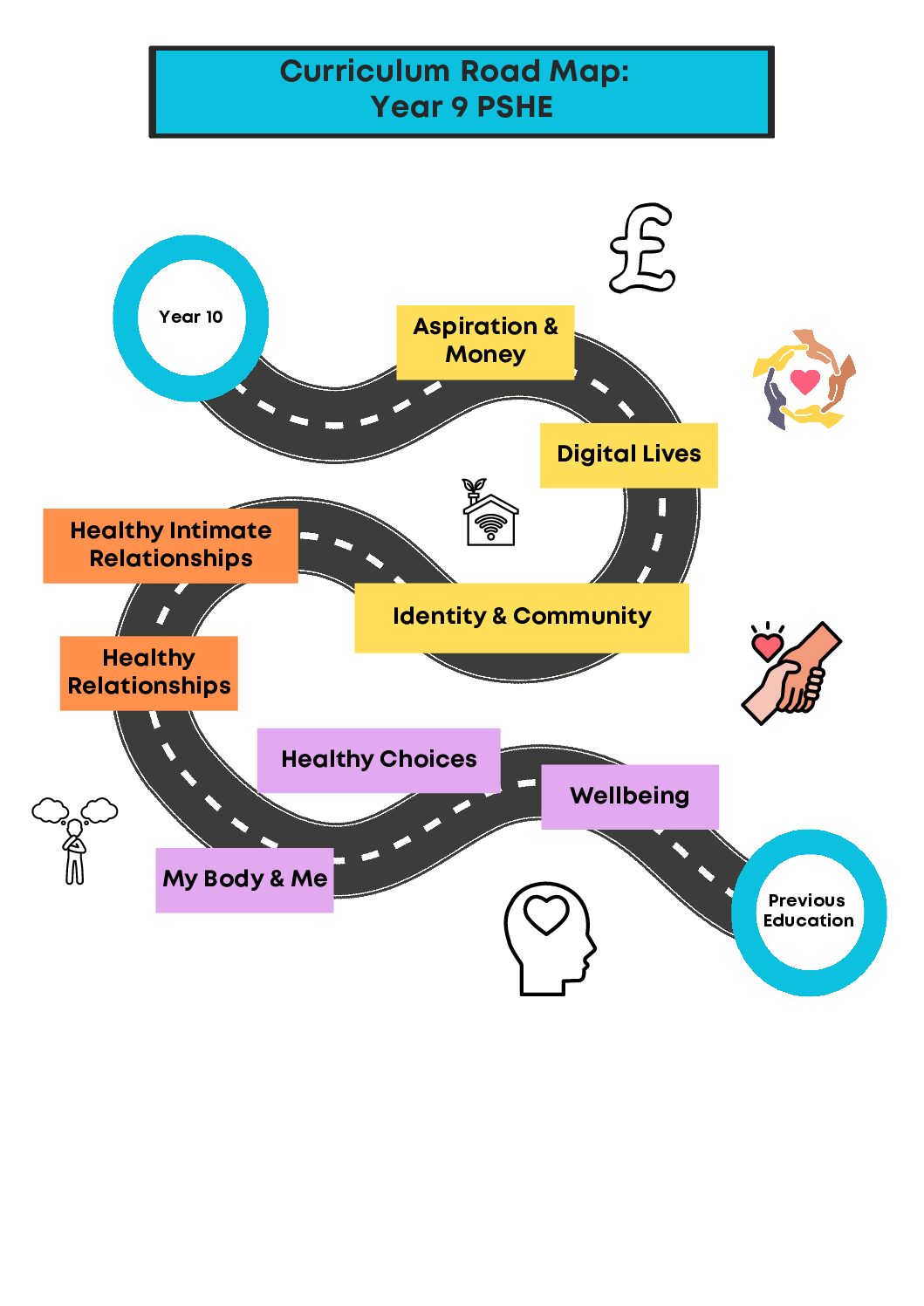
Content – Year 9
- Wellbeing:
- Self-regulation techniques
- Experiencing complex emotions (including mental ill-health)
- Why can it be hard to talk about our feelings?
- Healthy Choices:
- How could someone respond to emergencies involving drugs?
- How can we stay safe in public spaces?
- How can we avoid criminal exploitation?
- My Body & Me:
- How can we support everyone to have positive body image?
- How can we check our own health?
- How can blood, organ and stem cell donation save lives?
- How can people protect themselves and others from STIs
- Healthy Relationships:
- When does showing vulnerability in a relationship make you stronger?
- How can we avoid pressuring other people?
- How can we manage peer influence?
- How can we manage feelings around change?
- Healthy Intimate Relationships:
- How do people decide if they are ready for romance and intimacy?
- Why is sexual consent so important?
- Why is connection important in romantic relationships?
- How do online cultures affect our connection to each other?
- How can bystanders reduce sexual harassment?
- What are the warning signs of unhealthy sexual behaviour?
- How can we reduce domestic abuse?
- Identity & Community:
- How are stereotypes used to spread hate and make money?
- How do we build a feeling of belonging?
- What is the impact of sexism?
- Why does sexism still exist today?
- How can we create an anti-discrimination school?
- How can we talk about gender with respect?
- What are my rights?
- Digital Lives:
- What impact can our online choices have?
- What can be the impact of deepfakes?
- How can we respond to online influence?
- Why can being online feel addictive?
- Aspiration & Money:
- Pathways to the future that I want
- Setting high expectations for the future
- Making financial decisions that work for me
- How do we avoid financial scams and exploitation?
Support
- Talking to your teenager – NHS
- https://www.nhs.uk/healthier-families/
- https://www.childline.org.uk/
- https://crimestoppers-uk.org/fearless
- https://www.ceopeducation.co.uk/11_18/
- https://saferinternet.org.uk/online-issue/social-media-3
- https://www.matthewproject.org/
- https://www.talktofrank.com/
- https://www.brook.org.uk/
- https://www.nhs.uk/live-well/sexual-health/where-can-i-get-sexual-health-advice-now/